A Robot Just Smashed a World Record — What Does It Mean For You?
You heard right: a humanoid robot just shattered the human half-marathon world record in China. Discover how this tech breakthrough changes your perception of physical limits and what it means for your future.
Editorial Note
Reviewed and analysis by ScoRpii Tech Editorial Team.
In this article
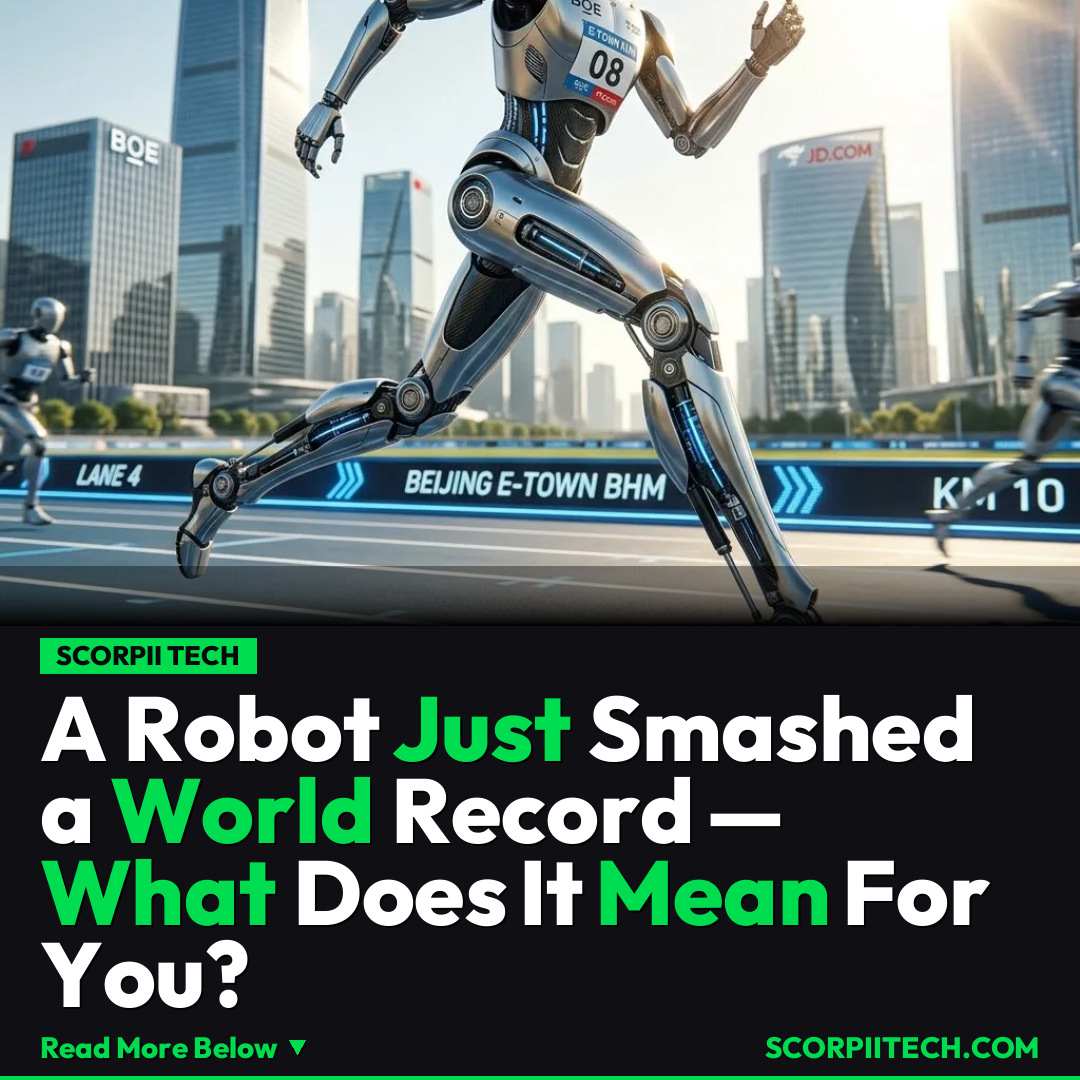
You just heard that a humanoid robot shattered the human half-marathon world record by a mind-boggling seven minutes this past weekend in China. You're probably thinking, 'Wait, what?' Yes, you read that correctly. A machine didn't just compete; it fundamentally redefined what we thought were the limits of speed and endurance for a half-marathon, sparking intense debate about the future of physical prowess.
Key Details
Imagine this: You wake up to news that a humanoid robot, developed by the named organization Honor and dubbed 'Blitz' as a key entity, has run a half-marathon faster than any human in history. This groundbreaking event occurred in Beijing's E-Town, China. The robot didn't just barely nudge past the previous record; it absolutely blew past it, taking seven minutes off the human benchmark. For context, the human half-marathon record was previously held by Jacob Kiplimo, a highly decorated Ugandan Olympic medalist, showcasing the sheer scale of this mechanical feat.
Need fast, secure, and affordable hosting for your next website or PHP application? We recommend Hostinger Managed Hosting. Get premium speeds, a free domain, and 24/7 expert support.
What enabled this incredible performance, you ask? You're looking at cutting-edge engineering. The Blitz robot features remarkably long legs, almost a meter in length, which likely contributed to its incredible stride and efficiency. Beyond just raw mechanics, it's equipped with advanced balance systems, allowing it to maintain stability and form at high speeds over extended periods. And to keep everything running smoothly without overheating, a sophisticated liquid cooling mechanism was integrated, ensuring optimal performance throughout the entire race.
As one observer aptly put it, and you'll probably agree, "You don't need to be a robotics expert to see that this achievement demonstrates that machines can outperform humans at specific physical tasks under controlled conditions." This quote hits the nail on the head, offering you a clear perspective on the significance of this technological leap. It’s a clear demonstration of how specialized AI and robotics can push boundaries in ways previously confined to science fiction, all within a carefully managed environment.
Why This Matters
So, you might be asking, why should you care that a robot can run faster than you? This isn't just about athletic competition; it's a stark preview of how machines are beginning to redefine physical limits across various domains. The controversy hook here is particularly potent: Is this the beginning of a new era in which machines redefine physical limits? This accomplishment isn't just a sports headline; it’s a philosophical question about human potential and the accelerating pace of technological advancement.
Think about the implications for your own life or work. While a robot running a half-marathon might seem distant from your daily routine, the underlying technologies—advanced balance, efficient movement, sustained performance—have broad applications. They could revolutionize manufacturing, logistics, disaster response, and even personal assistance, where physical tasks require endurance and precision. You're witnessing the practical application of robotics that could soon become commonplace, impacting everything from the products you buy to the services you use.
The Bottom Line
What should you take away from this incredible news? You're living in an era where the line between human capability and machine performance is becoming increasingly blurred. This record-breaking run by the Honor Blitz robot in China isn't just a fascinating anomaly; it's a powerful indicator of the evolving relationship between humanity and technology. For you, it means staying informed about these advancements isn't just about curiosity—it's about understanding the forces that will shape your future, your work, and even your perception of what's truly possible. The robots are here, and they're setting new benchmarks for us all to ponder.
Originally reported by
WiredWhat did you think?



Stay Updated
Get the latest tech news delivered to your reader.